

Hear from Our Customers
That musty smell in your basement isn’t just an old house quirk. Your kids’ constant coughing that gets better when they leave for school isn’t just allergies. And that slight discoloration on your ceiling isn’t something you should ignore until you’re ready to sell.
Mold grows where you can’t see it. Behind walls. Under flooring. In your HVAC system. By the time it’s visible, you’re already dealing with a bigger problem than you think.
Professional mold testing finds what’s actually there—not what you hope isn’t. You get lab results that tell you the type of mold, the concentration levels, and whether your indoor air quality is affecting your family. No guessing. No wondering if that headache is just stress or if something in your home is making you sick.
Most Carversville homeowners we test are surprised by what we find. Not because their homes look dirty—they don’t. But because Bucks County’s humid summers and older home construction create perfect conditions for hidden mold growth. Stone foundations trap moisture. Crawl spaces stay damp. Attics with poor ventilation become breeding grounds.
Testing gives you answers. And answers let you make decisions based on facts, not fear.
We’ve spent over twenty years testing homes throughout Bucks County. We know what Carversville’s climate does to older homes. We know where moisture hides in stone foundations and how poor ventilation in historic properties creates problems most homeowners never suspect.
We’re not a national franchise reading from a script. We’re local. We’ve tested thousands of homes in this area, and we’ve seen every type of mold issue Pennsylvania’s humidity can create.
When we test your home, you get a thorough visual inspection, moisture mapping with professional equipment, and air quality testing that measures spore levels in multiple areas. If we need surface samples, we take them. You receive a detailed report with photos, lab results, and clear recommendations—not a sales pitch for services you don’t need.
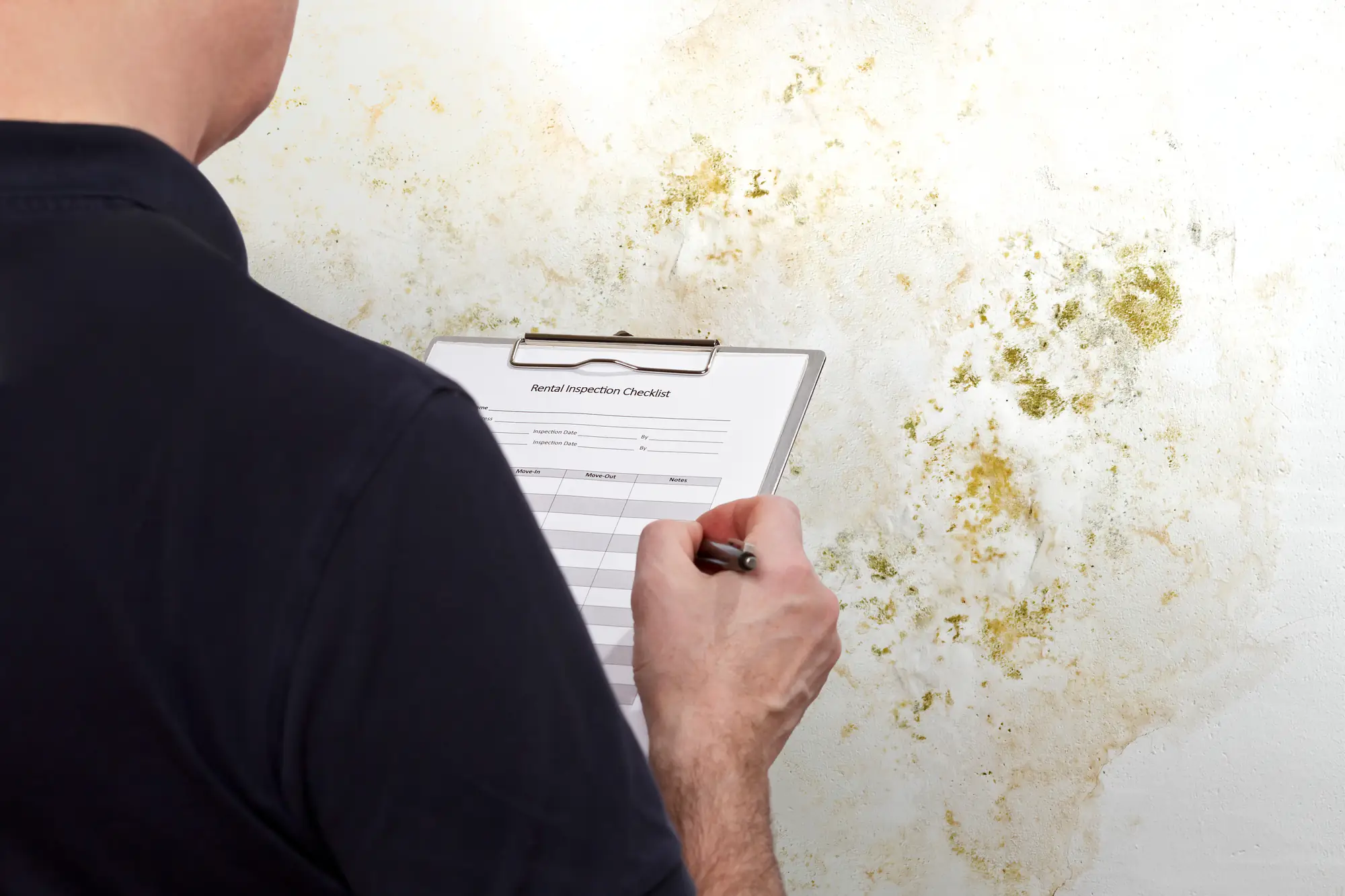
First, we walk through your home and look for visible signs of mold or moisture problems. We check basements, attics, crawl spaces, bathrooms, and anywhere water or humidity tends to accumulate. We’re looking for discoloration, water stains, condensation patterns, and ventilation issues.
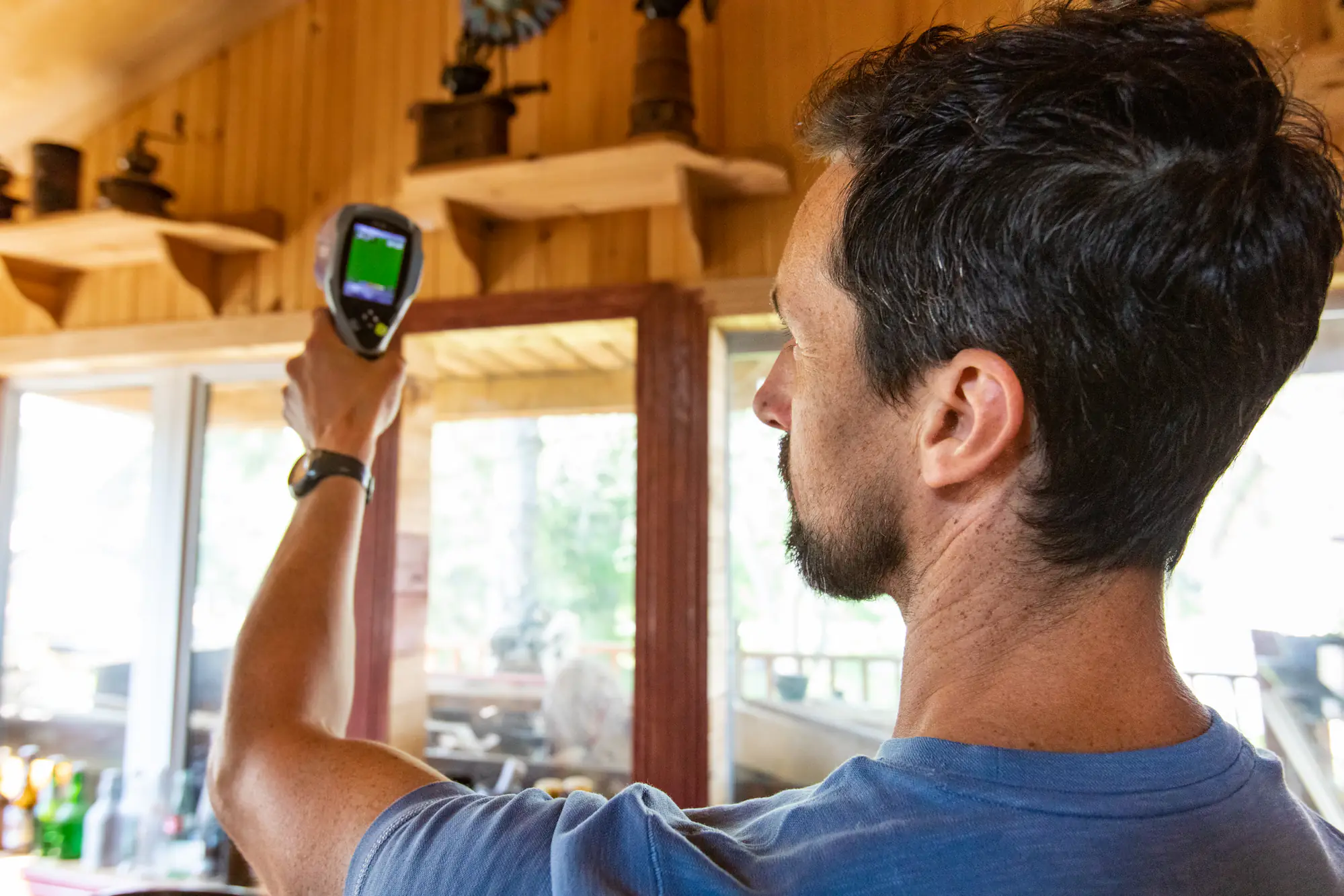
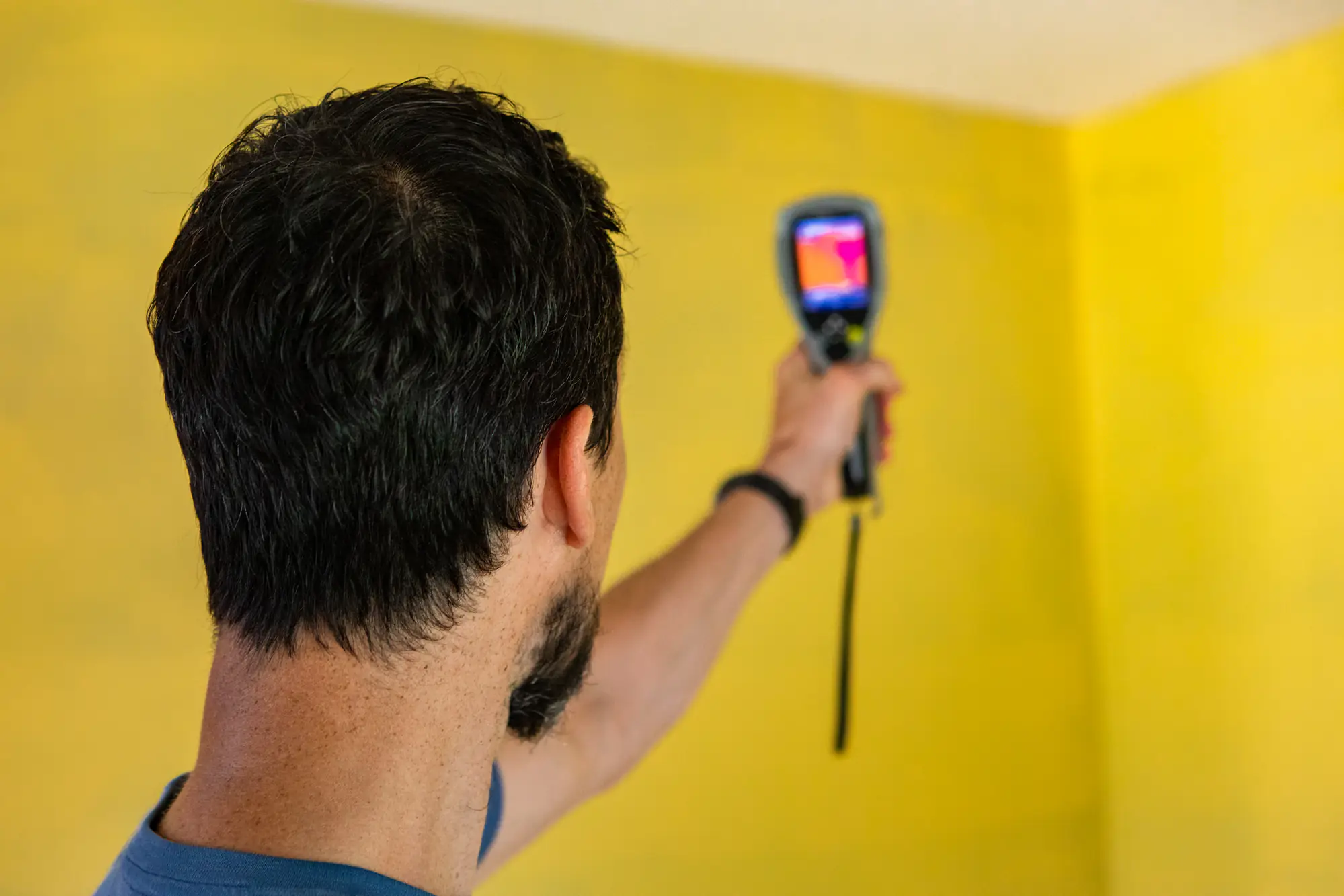
Next, we use moisture meters and thermal imaging to detect dampness inside walls and hidden areas where mold might be growing completely unseen. These tools find temperature differences and moisture levels that indicate problems you can’t see with your eyes.
Then we collect air samples from multiple rooms to measure mold spore concentrations. We also take samples from outside to establish a baseline—because some mold spores are always present in outdoor air. The comparison tells us if your indoor levels are elevated.
If we find visible mold or suspicious areas, we may take surface samples to identify the specific type. All samples go to an independent lab for analysis.
You get results within 3-5 business days. We call you to explain what we found, what it means for your home and health, and what your options are. If there’s a problem, we give you a clear action plan. If your air quality is fine, you get peace of mind.
Ready to get started?
Every mold inspection includes a comprehensive visual assessment of your entire home. We don’t just look at the obvious spots—we check areas most homeowners never think about. Moisture mapping with professional-grade equipment identifies where humidity is accumulating behind walls, under floors, or in concealed spaces.
Air quality testing measures mold spore levels throughout your home. We sample multiple areas because mold doesn’t spread evenly. Your basement might have high levels while your bedrooms are fine. Or your HVAC system might be circulating spores from a hidden source. Multiple samples give you the complete picture.
You receive a detailed written report with photos of any problem areas, lab results from all samples, and specific recommendations for next steps. If remediation is needed, we explain what that involves. If the issue is minor and you can handle it yourself, we tell you that too.
Carversville homes face specific challenges. Many properties here were built decades ago with stone foundations that weren’t designed with modern moisture barriers. Bucks County’s climate means high humidity in summer and temperature swings in winter that cause condensation. Older homes often have ventilation systems that weren’t built for today’s tighter construction standards. We account for all of this when we test your property.
Testing typically costs between $200 and $800 depending on your home’s size and the scope of testing needed. That’s a small investment compared to the thousands you’ll spend if mold spreads unchecked—or the 20-37% drop in property value that comes with undisclosed mold problems.
You’re not overreacting if you’re noticing health symptoms that seem worse at home—persistent coughing, sneezing, headaches, or allergy symptoms that improve when you leave the house. You’re not overreacting if you smell something musty and can’t find the source. And you’re definitely not overreacting if you’ve had water damage, flooding, or plumbing leaks.
Mold needs moisture to grow, and it can start spreading within 24-48 hours after water exposure. If you’ve had any water issues in the past year, testing makes sense. If your home is older and you’ve never had the air quality checked, testing gives you a baseline.
The reality is that most mold grows hidden. By the time you see it, you’re already dealing with a larger problem. Testing finds issues early when they’re easier and cheaper to fix. It’s not about paranoia—it’s about knowing what you’re breathing and whether your home environment is affecting your family’s health.
A mold inspection is the visual assessment—we walk through your home, look for signs of mold or moisture problems, and use equipment like moisture meters and thermal imaging to detect hidden issues. An inspection tells you where problems might exist.
Mold testing involves collecting actual samples—either air samples or surface samples—and sending them to a lab for analysis. Testing tells you what types of mold are present and at what concentration levels. It gives you specific data about your indoor air quality.
Most comprehensive mold checks include both. We inspect to find problem areas, then we test to confirm what’s actually there. You need both pieces of information to make informed decisions. The inspection shows us where to look. The testing tells us what we’re dealing with and whether it’s affecting your air quality enough to warrant action.
Lab testing identifies the specific species of mold present in your home, including Stachybotrys chartarum—the species people call “black mold.” But here’s what matters more than the species: the concentration and your exposure.
All mold can cause health problems if you’re exposed to high enough levels or if you’re sensitive. The CDC doesn’t recommend testing to determine if you should remove mold—they recommend removing it regardless of type. But testing still serves a purpose: it tells you how widespread the problem is and whether your air quality is compromised.
If you have visible mold, you need it removed whether it’s black mold or any other type. If you don’t have visible mold but you’re experiencing symptoms, testing tells you if elevated spore levels are the cause. The species matters less than the concentration and your family’s reaction to it. We test to give you the full picture of what’s in your air and where it’s coming from.
Most residential mold testing in Carversville runs between $200 and $800. The range depends on your home’s size, how many areas need testing, and whether we’re doing air sampling, surface sampling, or both.
A basic inspection with air sampling for a smaller home might be $200-400. A larger home with multiple levels, or a property where we need extensive surface sampling and moisture mapping, might run $600-800. We give you a clear quote upfront based on what your situation requires.
That cost covers the inspection, professional equipment use, lab analysis of all samples, and a detailed report with our findings and recommendations. Compare that to the thousands you’ll spend if mold spreads unchecked, or the 20-37% drop in home value that comes with undisclosed mold problems. Testing is the cheapest part of dealing with mold—it’s the part that tells you if you have a problem before it becomes expensive.
You can, but those kits have serious limitations. They only test the specific spot where you place them, which means you might miss mold growing in other areas. They don’t measure concentration levels or compare your indoor air to outdoor baselines. And they can’t detect mold hidden behind walls or in your HVAC system.
The bigger issue is interpretation. A DIY kit might tell you mold is present, but it won’t tell you if the levels are normal or concerning. Some mold spores are always present in every home—what matters is the type and concentration. Without professional equipment and experience, you’re guessing at what the results actually mean.
Professional testing uses calibrated equipment to measure airborne spore levels throughout your home. We compare multiple rooms and establish whether your indoor air quality is compromised. We use thermal imaging and moisture meters to find hidden problems. And we interpret results based on years of experience with Bucks County homes and climate conditions. If you’re going to test, test properly so you get actionable information.
If we find elevated mold levels or visible growth, we give you a clear explanation of what we found, where it’s located, and what’s likely causing it. You get a detailed report with photos, lab results, and specific recommendations for addressing the problem.
For minor issues—small areas of surface mold caused by condensation or poor ventilation—we might recommend solutions you can handle yourself along with fixes to prevent recurrence. For larger problems or hidden mold growth, we explain what professional remediation involves and what it typically costs.
We can handle the remediation work ourselves, or if you prefer to get multiple quotes, we provide documentation that other companies can use to give you accurate estimates. If your mold problem stems from a covered issue like sudden water damage, we’ll work with your insurance company and provide the documentation they need.
The goal isn’t to scare you or oversell services. It’s to give you facts so you can make informed decisions about your home and your family’s health. Sometimes that means major remediation. Sometimes it means minor fixes and better ventilation. We tell you what we find and what makes sense for your situation.
Other Services we provide in Carversville